Selecting the right loader bucket size is crucial for maximizing performance and reducing operational costs on any construction or agricultural project. The perfect balance between capacity, machine power, and job requirements ensures optimum efficiency, safety, and long-term productivity. This guide explores the essential factors, calculations, and practical tips to help you match your loader with the ideal bucket volume.
Assessing Your Application Requirements
Every project has unique demands. Before committing to a bucket, you must evaluate the material, job site conditions, and desired workflow. Consider the following:
- Material Characteristics: Is it sandy soil, dense clay, loose gravel, or light mulch? Each substance requires careful analysis of material flow and handling.
- Load Weight Limits: Exceeding the loader’s rated capacity can cause structural strain, reduce wear life, and lead to safety hazards.
- Ground Conditions: Soft or uneven terrain may demand a smaller or specialized bucket to maintain stability and traction.
- Cycle Frequency: High-cycle operations benefit from smaller buckets to speed up cycle time, while bulk material moves often suit larger volumes.
- Transport Constraints: Consider the size of trucks, hoppers, or conveyors that will receive the load to avoid spillage or multiple trips.
Understanding Key Parameters
Material Density and Specific Gravity
The capacity of a bucket is typically measured in cubic yards or cubic meters, but the actual payload weight depends on material density. For example, a bucket may hold 1.5 cubic yards, but if the material weighs 3,000 pounds per cubic yard, the total load will approach 4,500 pounds. Always refer to density charts for:
- Sandy fill (around 2,700 lb/yd³)
- Loose topsoil (about 2,200 lb/yd³)
- Wet clay (approximately 3,000 lb/yd³)
- Light materials, like sawdust (200–500 lb/yd³)
Loader Machine Specifications
Check the loader’s data plate or operator’s manual for critical ratings:
- Lifting capacity at various lift heights
- Hydraulic flow rate and pressure
- Breakout and tear-out forces
- Overall machine weight and stability margins
Ensure the bucket’s filled weight does not exceed 85–90% of the loader’s rated tipping load to maintain a safe margin.
Cycle Time and Productivity Goals
Cycle time includes filling, lifting, swinging, dumping, and returning. A larger bucket may cut down on the number of cycles but increase fill time and stress on hydraulics. Optimizing cycle time is a balance between bucket volume and machine maneuverability.
Calculating the Optimal Bucket Volume
Follow these steps to determine the ideal bucket size:
- Identify the average material density (lb/yd³ or kg/m³).
- Determine desired payload weight (around 85% of loader capacity).
- Calculate required volume: Payload weight ÷ material density = volume.
- Convert units if necessary (cubic yards to cubic meters or vice versa).
- Select a bucket size that matches or is just below the calculated volume to preserve safety margins.
Example: A loader with a rated tip load of 10,000 lb. Working threshold: 8,500 lb. If digging clay at 3,000 lb/yd³, volume = 8,500 ÷ 3,000 ≈ 2.83 yd³. Choose a 2.8–3.0 yd³ bucket.
Practical Tips for Bucket Selection
Apart from pure calculations, real-world insights can refine your choice:
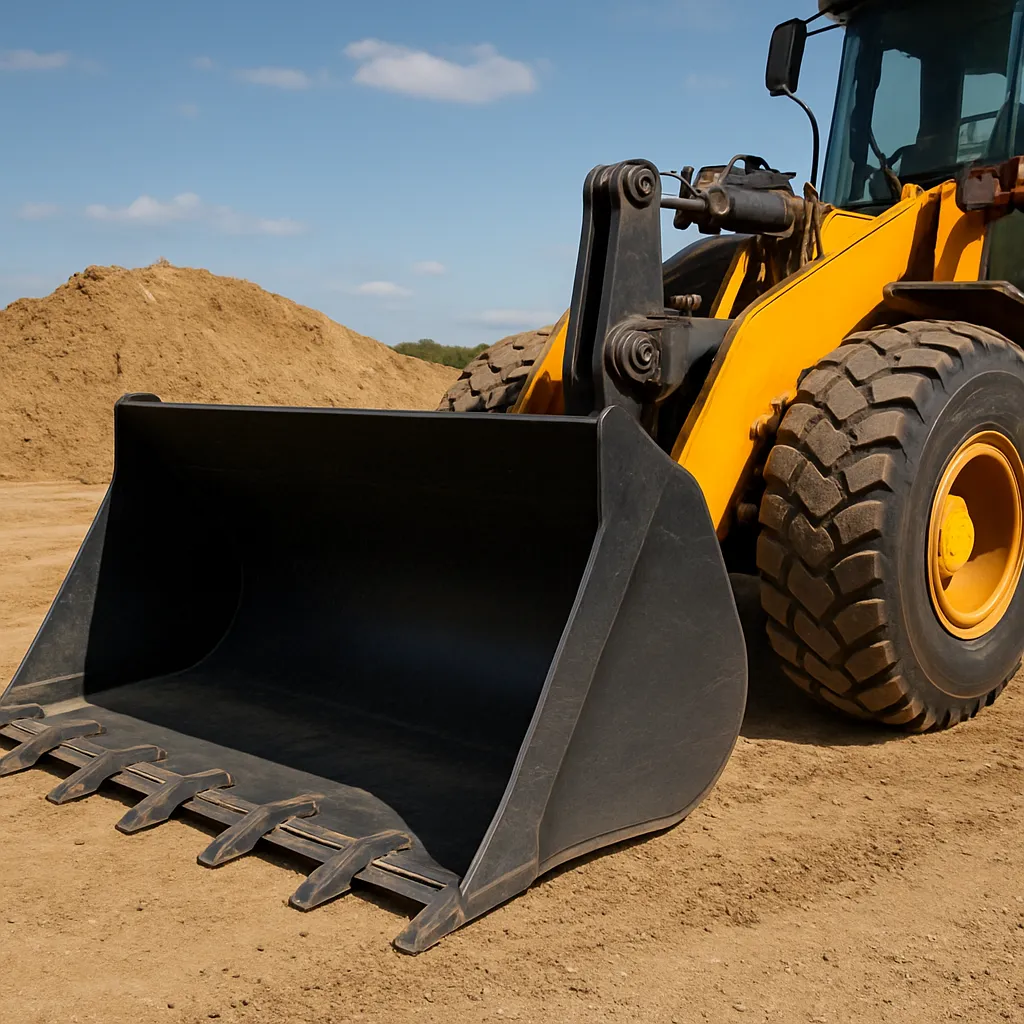
- Teeth vs. Edge: Choose a tooth-equipped bucket for rocky conditions to penetrate and break up material. Use a smooth edge for granular, free-flowing substances.
- High-Dump Buckets: Ideal when loading into high-sided trucks. They offer greater clearance but might reduce breakout force.
- Multi-Purpose Buckets: Combine dozing, clamping, and grading functions. They add versatility but may have lower maximum volume.
- Bolt-On vs. Weld-On: Bolt-on wear parts simplify maintenance and extend wear life, while weld-on edges tend to be more robust but harder to replace.
- Side Cutters: Protect the bucket shell and improve penetration on abrasive terrains.
- Task-Specific Features: Rock buckets, light-material buckets, and manure forks exist to handle specialized jobs.
Maintenance and Longevity Considerations
A properly sized bucket will last longer, but routine upkeep is equally vital:
- Inspect cutting edges and teeth daily for cracks or excessive wear.
- Lubricate pivot points and pins to prevent wear and binding.
- Monitor hydraulic connections for leaks that can reduce efficiency.
- Clean out debris to avoid corrosion and material buildup.
- Rotate or flip wear components when signs of uneven erosion appear.
Regular maintenance not only safeguards your investment but also preserves optimal machine compatibility and reduces downtime.