Integrating tractors into reforestation projects can drastically improve efficiency and outcomes, transforming large-scale planting efforts into streamlined operations. By leveraging specialized attachments and adopting best practices, teams can optimize soil health, reduce labor costs, and promote long-term biodiversity. This article explores key strategies for selecting the right machinery, executing precise planting techniques, and ensuring robust post-planting management.
Equipment Selection and Preparation
Choosing the appropriate tractor and fitting it with the right implements is the cornerstone of any successful reforestation effort. Modern tractors come in various sizes and power ranges, but not all models are equally suited for forestry applications.
Assessing Tractor Power and Size
Begin by evaluating the terrain and the scale of the reforestation area. For rugged or uneven ground, a tractor with at least 80–100 horsepower and four-wheel drive provides the necessary traction. Smaller plots on gently rolling hills might only require 40–60 horsepower models. Matching horsepower to soil type ensures that the machine can operate without excessive slippage or soil compaction.
Essential Attachments for Reforestation
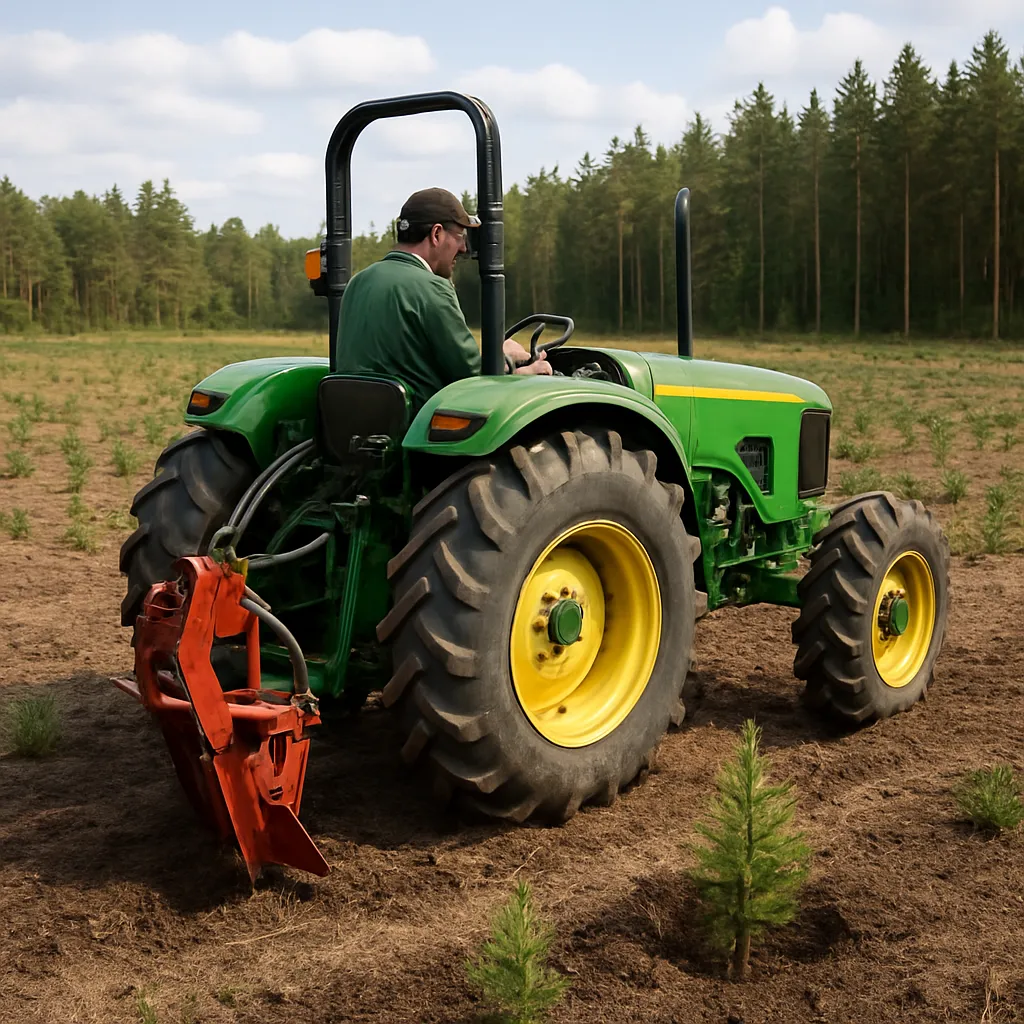
Equip your tractor with specialized tools designed for tree planting and site preparation. Key implements include:
- Tree planters: Automated units that create holes and deposit seedlings at consistent depths.
- Subsoilers: Deep-ripping devices that break up compacted layers and improve soil health.
- Mulchers and brush cutters: Clear debris and competing vegetation to reduce resource competition.
- Roller crimpers: Flatten cover crops to create a nutrient-rich mulch layer.
- GPS guidance systems: Enable precise row spacing and pattern consistency for optimal growth.
Pre-Operational Checks and Maintenance
Maintaining tractors in peak condition is critical to avoid breakdowns in remote areas. Establish a pre-operation checklist that covers:
- Engine oil and hydraulic fluid levels
- Air and fuel filter integrity
- Tire pressure and tread wear
- Attachment mounting points and hydraulic hoses
- Calibration of planting depth and spacing controls
Regular inspections of these components ensure sustainability over long planting seasons and reduce downtime.
Efficient Planting Techniques
Once machinery is prepared, the next step is implementing planting methods that maximize planting efficiency and seedling survival rates. Proper technique not only saves time but also fosters healthier forests.
Site Preparation and Soil Conditioning
Effective reforestation starts with preparing the ground. Use subsoilers to fracture compacted layers, enabling deeper root penetration. Follow with a light tillage pass to level the soil surface. Integrating cover crops before planting can enrich the soil with organic matter; after establishing cover, use a roller crimper to lay down a mulch layer that retains moisture and suppresses weeds.
Precision Planting with Automatic Planters
Modern precision agriculture technologies like GPS-enabled automatic planters allow operators to maintain uniform spacing. This promotes even canopy development and reduces intra-species competition. Steps for optimized planting include:
- Calibrating planter spacing to species-specific requirements.
- Adjusting depth settings to the moisture-holding strata of the soil.
- Synchronizing tractor speed with seedling feed rate for consistent placement.
Manual vs. Mechanized Assistance
While fully mechanized planting accelerates progress, certain sensitive or steep areas may still require manual assistance. Combining tractor-based planting with hand crews for site-variation zones ensures that no seedlings are misplaced or damaged. This hybrid approach balances speed with precision, especially when reforesting riparian zones or steep embankments.
Post-Planting Management and Maintenance
After seedlings are in the ground, ongoing management with tractors helps ensure establishment success and healthy ecosystem development.
Mulching and Weed Control
Applying organic mulch or biodegradable mats using tractor-mounted spreaders conserves soil moisture and curtails weed growth. For larger plots, rotary brush cutters can remove invasive vegetation, reducing competition for nutrients and sunlight.
Irrigation and Soil Monitoring
In drought-prone regions, equipping tractors with tow-behind water tanks and misting booms can provide targeted soil health maintenance. Coupled with portable soil moisture sensors, operators can quickly identify dry zones and deliver water precisely where it is needed.
Long-Term Soil Compaction Management
Repeated machinery passes may lead to compaction layers that inhibit root growth. Schedule periodic subsoiling passes during the dormant season to alleviate compaction. This practice promotes deeper rooting and improves water infiltration over multiple years.
Sustainable Fuel and Emission Reduction
Transitioning to biodiesel blends or renewable diesel can lower carbon emissions without compromising tractor performance. Additionally, maintaining optimal engine tuning and cleaning air filters regularly reduces fuel consumption and extends equipment lifespan, supporting overall project sustainability.
Monitoring Growth and Adaptive Management
Utilize GPS data logs and aerial imagery to track plantation progress. Tractor-mounted drone launchers are emerging technologies that deploy drones for rapid canopy health assessment. By integrating these digital tools, project managers can adapt strategies, address stress symptoms early, and ensure robust forest establishment.