Proper care of your tractor’s power take-off (PTO) shaft is vital for both **performance** and **safety**. Neglecting PTO maintenance can lead to costly **repairs**, unexpected downtime, and even personal injury. This guide offers practical tips and step-by-step procedures to keep your PTO shaft in top condition throughout every season.
Understanding PTO Shaft Components
Before diving into maintenance tasks, it’s essential to recognize the main parts that make up a typical PTO shaft assembly:
- Input Yoke: Connects to the tractor’s PTO stub and transmits rotational force.
- Telescoping Shaft: Allows for variable length and helps absorb vibrations.
- Universal Joints: Permit angular movement and ensure smooth power transfer.
- Safety Shield: Protects operators by covering rotating components.
- Output Yoke: Attaches to the implement’s input shaft.
A thorough understanding of these parts helps in pinpointing wear, ensuring proper **alignment**, and maintaining overall **durability**.
Routine Inspection and Cleaning
Frequent inspections reveal small issues before they escalate. Aim to check your PTO shaft every 25 operating hours or at least once per month during busy seasons.
Visual Inspection Steps
- Examine the safety shield for cracks, dents, or missing fasteners. A compromised shield poses a serious hazard.
- Inspect the universal joints for play or visible rust. Excessive movement indicates worn bearings.
- Check the telescoping sections for smooth sliding action. Look for bent tubes or debris lodged between them.
- Examine the input and output yokes for deformation or keyway damage.
- Ensure the locking collar or pin is present and functions properly to prevent accidental disconnection.
Cleaning Procedure
- Secure the tractor and implement on a level surface, then disengage the PTO.
- Use a stiff brush to remove caked-on dirt, crop residue, and old grease.
- Wipe down all metal surfaces with a clean rag; apply solvent where grease buildup is heavy.
- Remove shields if possible, clean underneath, and reattach securely. Never operate without shields in place.
Proper Lubrication and Greasing
Lubrication is the heart of PTO maintenance. It minimizes friction, prevents corrosion, and extends component life.
Choosing the Right Grease
Select a high-quality, multipurpose grease rated for agricultural applications. Look for products that are:
- Water-resistant to protect against moisture intrusion.
- Extremely pressure (EP) formulated for heavy loads.
- Stable across a wide temperature range to prevent grease breakdown.
Greasing Frequency
- Grease all universal joints after every 10 operating hours in dusty or wet conditions.
- Apply grease to the telescoping shafts monthly, or more often if exposed to heavy contamination.
- Keep a grease log to track service intervals and prevent missed lubrication sessions.
Greasing Technique
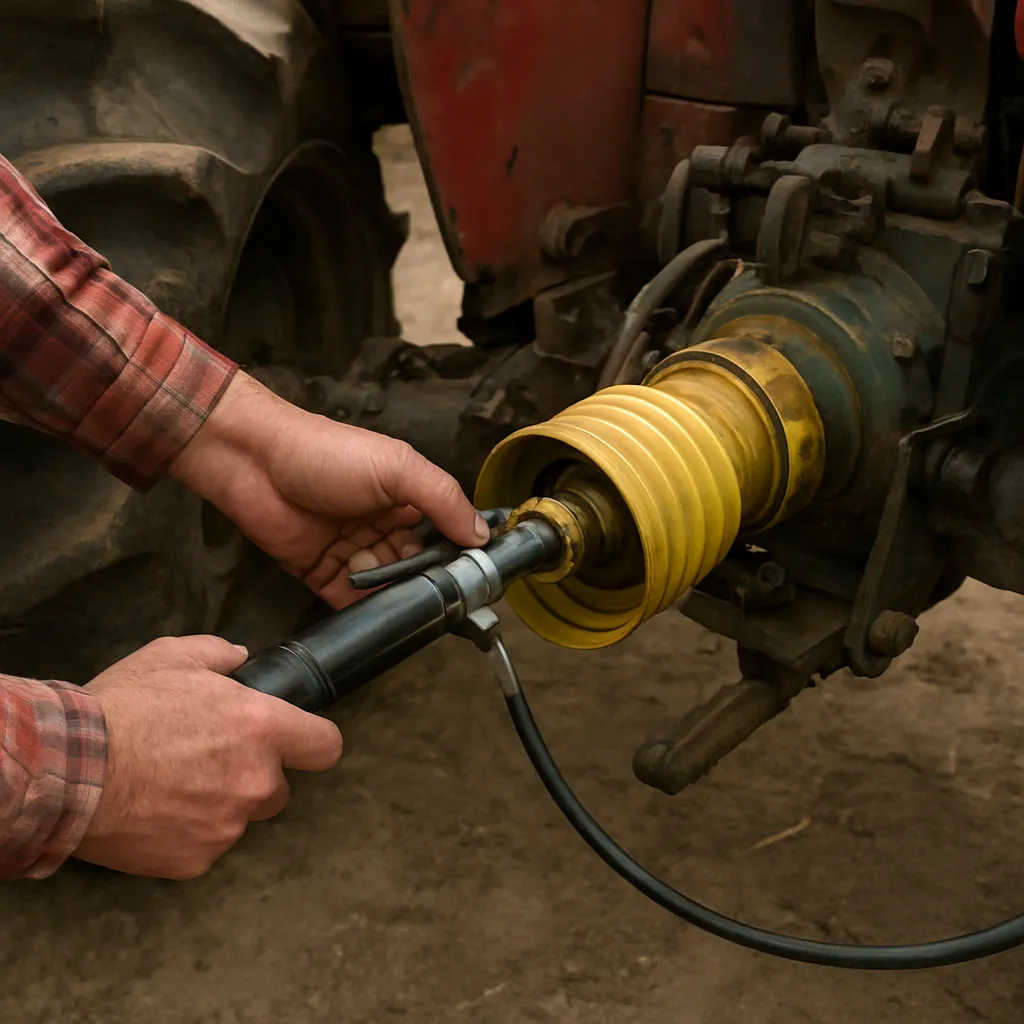
- Clean grease zerks before attaching the gun to avoid pumping dirt inside.
- Pump until fresh grease appears at the seals, but avoid over-pressurizing (which can split seals).
- Wipe away any excess to reduce debris accumulation.
Alignment and Adjustment Techniques
Proper alignment between the tractor PTO stub and implement shaft reduces vibration and wear. Misalignment strains bearings and universal joints.
Centerline Alignment
- Park on level ground, disengage the PTO, and chock wheels for safety.
- Measure the centerline height of both shafts; they must be within 1/8 inch of each other.
- If misaligned, adjust the implement’s hitch height or tractor lower links until levels match.
Angular Alignment
- Ensure that the angular misalignment does not exceed the universal joint’s tolerance (usually 3–5 degrees).
- If the angle is too steep, modify the implement’s tongue angle or shorten the top link.
A well-aligned PTO setup runs cooler, quieter, and with significantly less **vibration**.
Identifying and Replacing Worn Parts
Even with excellent upkeep, parts eventually wear out. Replacing components promptly prevents collateral damage.
- Universal Joint Wear: Look for loose bearings or clicking noises when rotating by hand. Replace if any bearing cap rotates in its cage or exhibits rust.
- Shaft Tubes: Bent or kinked tubes cannot be straightened safely; replacement is mandatory.
- Safety Shields: Any cracking, warping, or missing sections require immediate replacement to maintain operator protection.
- Bearings and Seals: Inspect seals for grease leaks; contaminated bearings must be swapped out.
Always use manufacturer-approved parts. Using substandard components risks premature failure and voids warranties.
Storage and Off-Season Care
Proper storage conditions can prevent corrosion and mechanical damage during idle periods.
Cleaning Before Storage
- Perform a final degreasing and wipe-down to remove moisture traps.
- Lightly coat bare metal surfaces with a rust-inhibitor spray or thin film of oil.
Securing the Shaft
- Retract telescoping tubes to their shortest practical length to minimize flex fatigue.
- Cap or plug open ends to keep out rodents and debris.
- Store the shaft in a dry, covered area. If left outdoors, elevate off the ground on blocks.
Periodic Off-Season Checks
- Rotate the shaft by hand every 4–6 weeks to redistribute protective coatings.
- Inspect all **fasteners** and shields to ensure nothing has loosened over time.
Troubleshooting Common PTO Issues
Recognizing early signs of trouble can save hours of downtime:
- Excessive Vibration: Often caused by bent shafts or misaligned yokes. Check alignment first.
- Loud Knocking: Indicates failing universal joint bearings. Listen for irregular beating sounds.
- Grease Leakage: Sign of torn seals or over-pressurization. Replace seals and adjust greasing technique.
- Difficult Engagement: Could stem from damaged splines or unlubricated telescoping sections. Clean and lubricate thoroughly.
When in doubt, consult your tractor’s service manual or a certified **technician** to diagnose and fix serious malfunctions.