Selecting the right tractor for demanding sloping terrains involves more than just picking the highest horsepower model. Farmers and land managers tackling steep gradients need machines that balance power with agility, ensuring productivity and operator safety on every pass. This guide walks through essential considerations, from soil conditions to specialized attachments, helping you make an informed decision for your hillside operations.
Assessing Terrain and Soil Conditions
Before diving into specs, it’s crucial to evaluate the physical characteristics of your land. Hillside work presents unique challenges that vary with slope angle, soil type, and moisture content. Proper assessment helps identify which tractor features will enhance performance and reduce the risk of slippage.
Measuring Slope and Gradient
- Use an inclinometer or smartphone app to determine slope angles.
- Most tractors handle up to 15% slopes comfortably; above 20% requires specialized equipment or alternative methods.
- Mark problematic zones for later comparison when choosing traction enhancements.
Soil Composition and Moisture
- Clay soils can become slick when wet, demanding extra traction control.
- Sandy or loamy soils may drain faster but can cause wheel spin if loose.
- Consider seasonal variations: spring thaws and autumn rains affect mowing and tillage tasks significantly.
Key Tractor Specifications for Hillside Performance
When shopping for hillside tractors, specific technical attributes stand out. Prioritizing these criteria ensures a machine capable of tackling uneven ground safely while maintaining productivity.
Traction and Drive Systems
Four-wheel drive (4WD) or all-wheel drive (AWD) models generally provide superior traction on slopes. Some manufacturers offer optional differential locks to prevent wheels from spinning independently under low-grip conditions. Ensure your chosen model includes:
- Lockable differentials front and rear
- Low-range gearing to maintain consistent speed uphill or downhill
- Advanced traction control electronics, if available
Stability and Center of Gravity
Maintaining balance is critical. Look for tractors with a low-profile design and a wide wheelbase. Key design elements include:
- Compact frames to reduce tipping risk
- Ballasted wheels or additional weights for counterbalance
- Optional rollover protection structures (ROPS) specifically tested for incline safety
Horsepower and Torque
While raw horsepower matters, torque and engine response at low RPMs are equally important for uphill work. A machine with a “torquier” engine helps in pulling heavy implements on steep grades without over-revving. Consider these tips:
- Midsize tractors (50–100 HP) often strike the right balance for multi-purpose hillside use.
- Higher-rated PTO torque ensures consistent power delivery to implements.
- Turbocharged engines can provide additional punch, but verify cooling capacity under load.
Choosing and Using Implements for Hillside Tasks
Attachments play a central role in transforming a utility tractor into a hillside specialist. The right implements reduce slip, improve efficiency, and prevent equipment damage.
Maneuverability with Rear-Mounted Implements
Rear mount systems that fold close to the tractor’s footprint help maintain tight turning circles and lower the risk of ground contact on steep slopes. Typical implements include:
- Slope mowers with adjustable deck heights
- Tilted box scrapers for gravelling steep tracks
- Flail mowers designed to handle uneven ground cover
Front-Mount Options and Weight Distribution
Front-mounted attachments can improve uphill balance by shifting weight forward. However, adding too much front weight can overload the front axle. Common adaptations are:
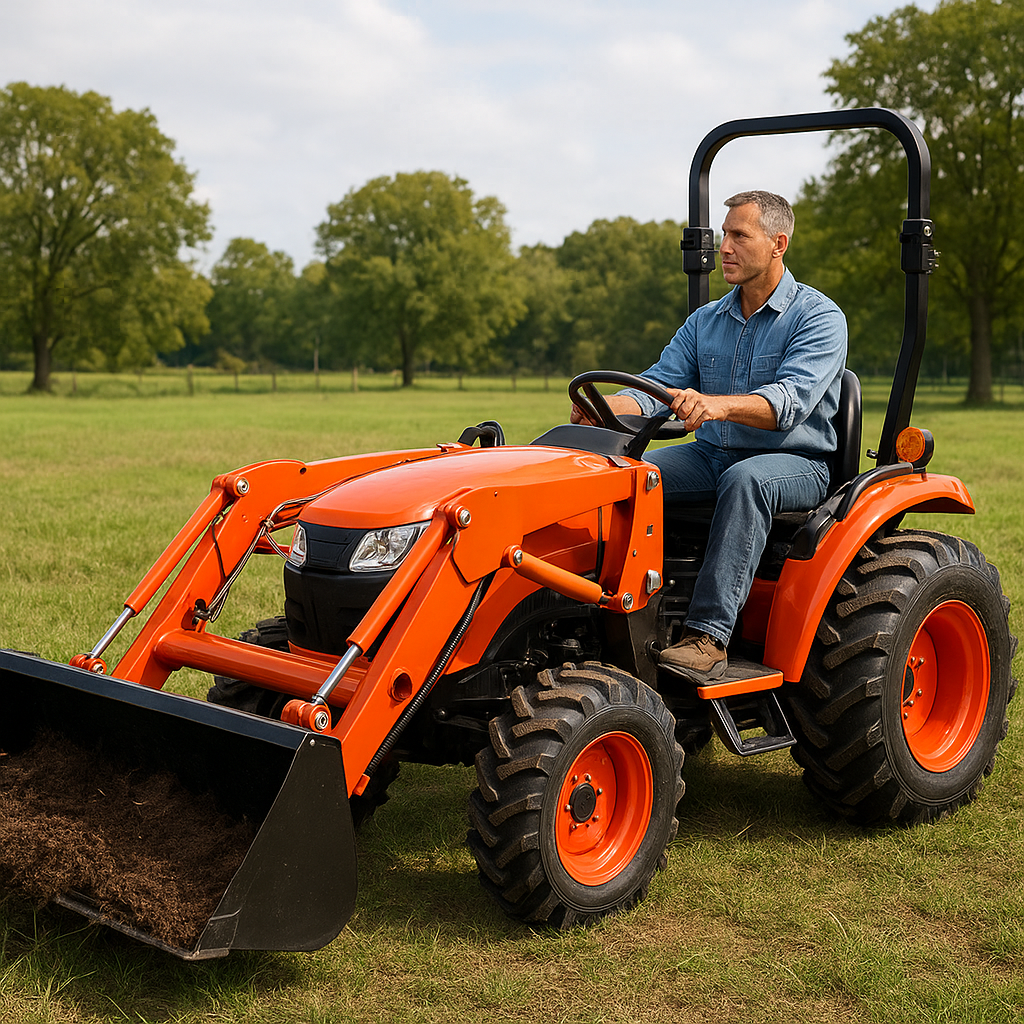
- Front loaders with counterweights optimized for incline operations
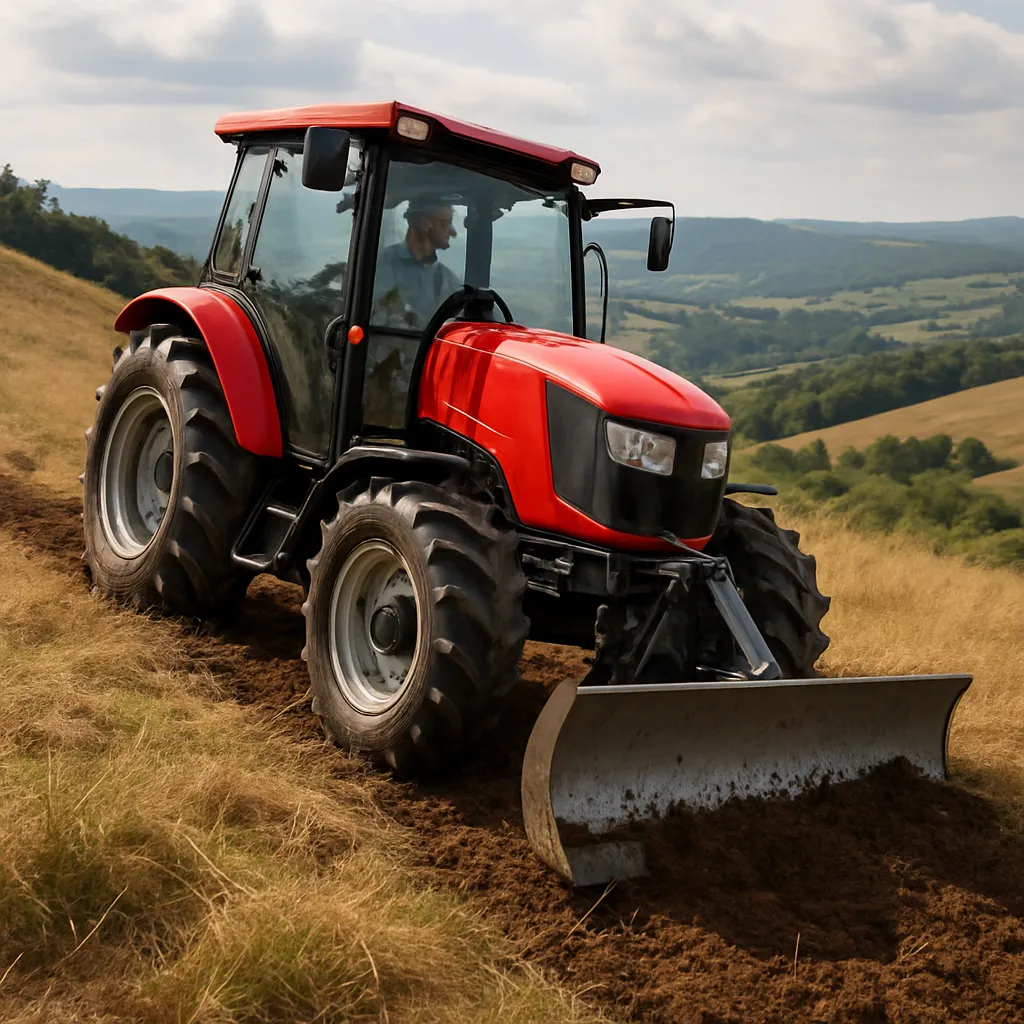
- Snowblowers or blades with hydraulic angle control for hillside clearing
Power Take-Off (PTO) Configurations
Ensure compatibility between the tractor’s PTO speed (540 or 1000 rpm) and your implements. For hillside use:
- 540 rpm systems often suffice for mowing and tilling
- High-torque PTO shafts help manage heavy-duty tasks without stalling
- Overrunning clutches protect driveline components during downhill reversals
Optimal Tire Configuration and Ballasting
Wheel setup is a game-changer on slopes. The right tires, combined with proper ballast placement, enhance grip and longevity.
Tire Types and Tread Patterns
- Bar tread or R1 agricultural tires excel in soft soils but may struggle on rocky slopes.
- R4 industrial tires provide a compromise between traction and wear resistance on hard surfaces.
- Dual wheels or tracks can increase footprint, distributing weight and reducing soil compaction.
Ballast and Weight Distribution
Adding ballast can significantly lower the tractor’s center of gravity. Best practices include:
- Front axle ballast to counterbalance rear-mounted implements.
- Rear tire ballast (liquid or cast weights) for improved rear traction.
- Check the manufacturer’s rated ballast limits to avoid exceeding axle load capacities.
Maintenance, Operator Training, and Safety
Breaking ground on hillsides demands rigorous upkeep and skilled operators. Preventive measures not only extend equipment life but also avert costly accidents.
Regular Inspections and Upkeep
- Daily checks on tire pressure and tread wear.
- Routine fluid inspections—hydraulics, transmission, and engine oil.
- Frequent cleaning of cooling fins to avoid overheating under continuous load.
Training for Slope Operation
Even the best tractor can become a hazard without proper operator knowledge. Key training points include:
- Speed control when ascending or descending
- Proper use of differential locks and low-range gears
- Safe hitching and unhitching of slope-sensitive implements
Emergency Preparedness
- Carry a two-way radio or mobile device for remote communication.
- Have a roll-over recovery plan and adequate first-aid supplies.
- Ensure all operators wear seat belts and approved helmets if ROPS are fitted.