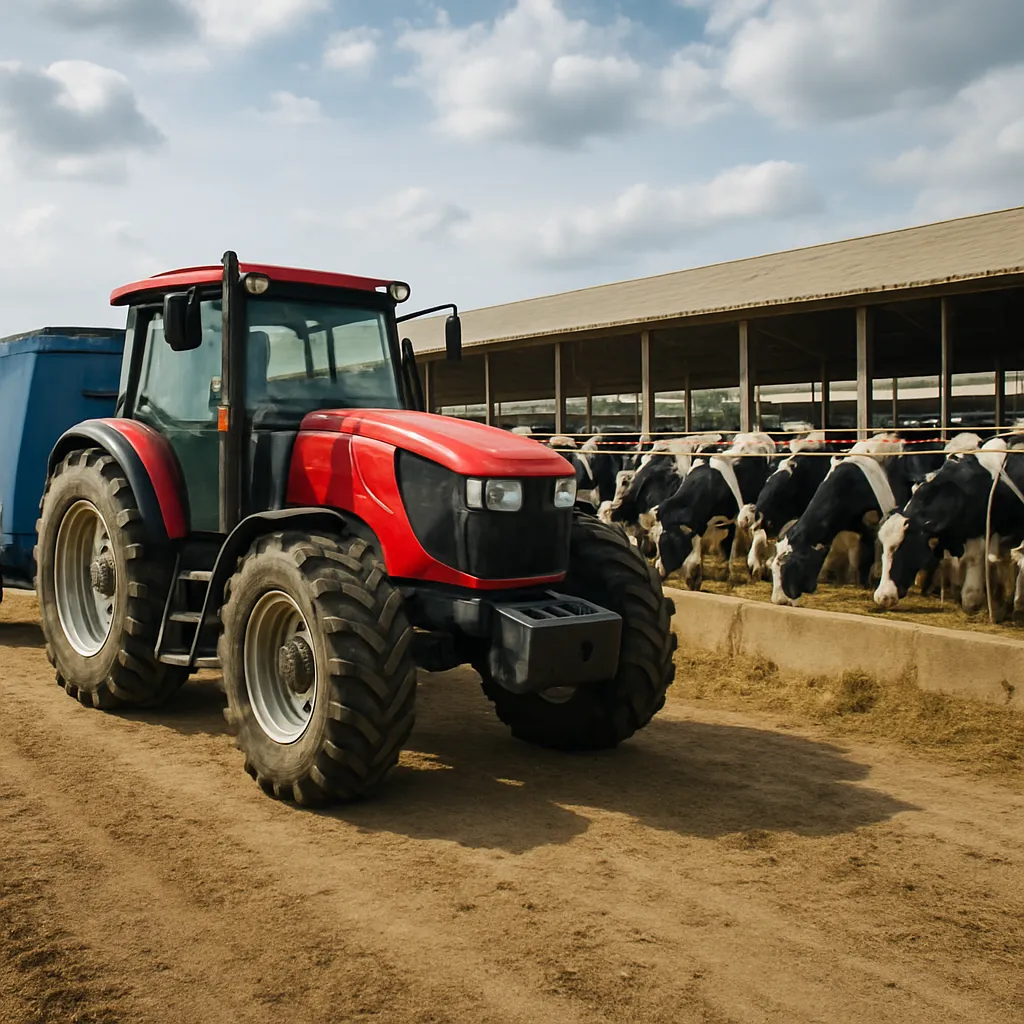
Tractors have become indispensable assets in dairy farming, providing the horsepower and versatility required to streamline daily operations. Their integration into herd management and feed production processes has revolutionized how farmers handle tasks ranging from forage harvesting to manure management. By leveraging modern tractor capabilities, dairy producers can achieve efficiency gains, optimize labor allocation, and improve overall herd welfare.
Essential Functions of Tractors in Dairy Farms
Feed Production and Delivery
One of the most critical uses of tractors on dairy farms is in the preparation and delivery of feed. Tractors equipped with specialized attachments such as silage choppers, bale wrappers, and feed mixers ensure that high-quality forage is processed quickly. A typical workflow includes:
- Harvesting forage crops with a forage harvester or mower.
- Transporting chopped silage to storage using front loader or forage wagon.
- Mixing total mixed rations (TMR) with a feed mixer to achieve balanced nutrition.
- Distributing feed along bunk lines using a tractor-pulled feed wagon.
These steps rely on tractor hydraulics to power attachments, while the chassis and tires provide necessary traction and stability in variable terrain and weather conditions.
Manure Handling and Nutrient Management
Appropriate manure management is essential for both biosecurity and soil fertility. Modern tractors facilitate:
- Slurry pumping with vacuum systems connected to a tractor’s PTO.
- Spreading solid or liquid manure evenly across fields.
- Incorporating nutrients into the soil through tillage implements.
Through precise control over application rates, tractors help dairy operators comply with environmental regulations and maximize sustainability by returning nutrients to cropland.
Advances in Tractor Technology Enhancing Dairy Productivity
GPS Guidance and Precision Agriculture
The introduction of GPS-based auto-steering systems has allowed dairy farmers to reduce overlap in field operations, saving time and fuel. Precision technology enables:
- Automated field patterns for accurate spreading and spraying.
- Variable-rate application of fertilizers and soil amendments.
- Real-time tracking of work progress and field boundaries.
These capabilities improve precision in field operations, enhance resource use efficiency, and lower overall input costs.
Telematics and Remote Monitoring
Telematics systems, integrated into modern tractors, transmit data on engine performance, fuel consumption, and operational hours back to farm management software. Key benefits include:
- Remote diagnostics to prevent breakdowns.
- Monitoring fuel economy trends and idling time.
- Scheduling proactive maintenance to reduce downtime.
Access to real-time metrics ensures managers can make informed decisions and optimize tractor utilization.
Automation and Robotics
Some dairy operations have adopted semi-autonomous tractor solutions for repetitive tasks. With advanced sensors and control algorithms, these tractors can:
- Follow predefined routes for field work with minimal operator intervention.
- Automatically adjust implement settings based on load and soil conditions.
- Integrate with other robotic systems, such as autonomous feed pushers in barns.
Such automation reduces labor costs and increases consistency of field and barn tasks.
Design Features Tailored for Dairy Environments
Enhanced Visibility and Maneuverability
Tractors used in close-quarter barn operations require superior visibility and a tight turning radius. Key design considerations include:
- High-visibility cabs with minimal blind spots.
- Four-wheel steering and compact wheelbases for precise movements between feed alleys.
- Low-profile hoods and elevated seating positions for clear lines of sight.
This focus on maneuverability ensures safe operation around livestock and reduces the risk of equipment-induced injuries.
Comfort and Operator Ergonomics
Extended use during feed delivery and bedding tasks demands operator comfort. Modern tractors feature:
- Air-suspended seats with multiple adjustment settings.
- Touchscreen consoles for implement control and telemetry readouts.
- Climate-controlled cabs with noise dampening.
Improved ergonomics translate into increased productivity and reduced operator fatigue over long shifts.
Environmental and Economic Considerations
Reducing Carbon Footprint
Given the dairy industry’s focus on sustainability, tractors now come with engines meeting stringent emission standards. Strategies to lower environmental impact include:
- Tier 4 Final engines with selective catalytic reduction (SCR) systems.
- Use of biofuels or biodiesel blends approved by manufacturers.
- Energy recovery hydraulic circuits that reduce power losses.
These measures help farms meet regulatory requirements while preserving air quality and reducing greenhouse gases.
Cost-Effectiveness and Return on Investment
When evaluating tractor purchases, dairy producers must consider total cost of ownership. Key factors include:
- Initial purchase price relative to expected service life.
- Maintenance schedules and availability of authorized technicians.
- Resale value based on brand reputation and hours in use.
High-quality tractors often deliver lower long-term costs through reliability and fuel-efficient designs, ensuring optimal cost-effectiveness in daily operations.
Future Directions and Innovations
Electrification and Hybrid Tractors
Research into electric and hybrid drive systems promises to transform how dairy tractors operate. Potential advantages include:
- Zero local emissions during electric-only operation.
- Reduced noise levels in barns and enclosed spaces.
- Instant torque delivery for attachments requiring frequent start-stop cycles.
Such innovations could be particularly beneficial for small-scale dairy units prioritizing minimal environmental footprints.
Integration with Precision Livestock Farming
Linking tractors to herd health and production data systems can yield new synergies. Envisioned applications involve:
- Automatically adjusting feed formulations based on milk yield analytics.
- Deploying robots for bedding and manure tasks triggered by animal comfort sensors.
- Utilizing drone surveys of forage fields to inform tractor-based nutrient applications.
By combining vehicle mobility with data-driven herd management, dairy operations stand to gain unprecedented control over both crop and livestock performance.