Maintaining tractor tires is crucial for ensuring optimal performance, safety, and longevity of agricultural equipment. This comprehensive guide explores the essential components of tractor tires, outlines routine inspection and upkeep tasks, delves into advanced repair methods, and offers tips for selecting and adapting tires to seasonal conditions. By mastering these practices, farmers and equipment operators can maximize the durability and performance of their tractors in the field.
Understanding Tractor Tire Anatomy
Before performing any maintenance, it’s important to recognize the key parts of a tractor tire. Each component plays a vital role in load-bearing capacity, traction, and overall safety.
- Tread: The patterned surface that contacts the ground, providing traction and self-cleaning action.
- Sidewall: The flexible wall between the tread and bead that helps absorb shocks and supports the weight.
- Bead: The innermost edge that seals to the rim, ensuring proper inflation and stability.
- Shoulder: The transition area between tread and sidewall, designed to distribute stress and resist tearing.
- Inner Liner: A rubber layer that retains air, enhancing longevity and preventing slow leaks.
Understanding these structures helps operators identify wear patterns, potential failure points, and the best strategies for maintenance and repair.
Routine Inspection and Maintenance Practices
Regular checks and simple adjustments can greatly extend tire life and improve field efficiency. Operators should establish a weekly and monthly inspection routine, focusing on the following aspects:
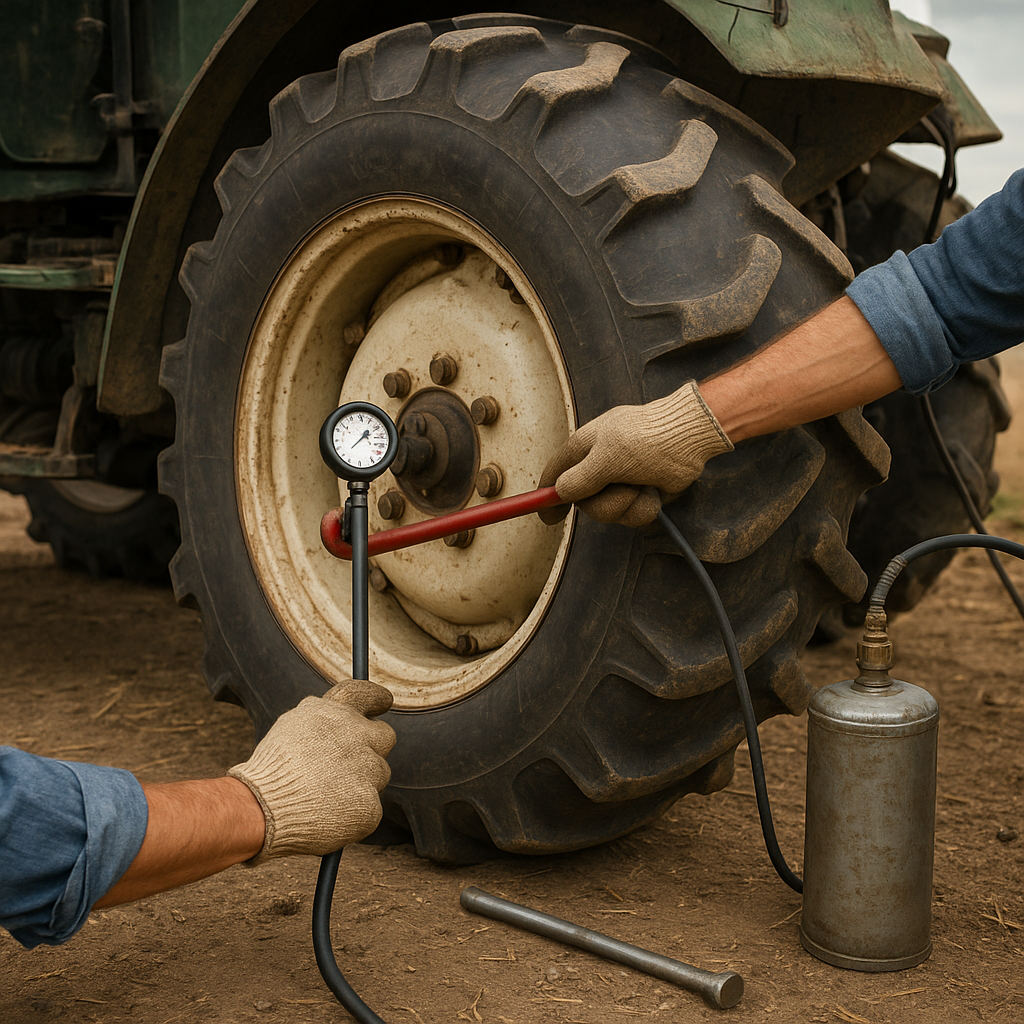
Pressure Checks
- Use a calibrated gauge to confirm psi is within the manufacturer’s recommended range.
- Underinflated tires can lead to increased fuel consumption, uneven wear, and reduced traction.
- Overinflation raises the risk of sudden blowouts and diminishes the contact patch.
Tread Depth and Wear Patterns
- Measure tread depth at the center and shoulders to detect uneven wear.
- Inspect for lugs that are rounded off or areas with excessive bald spots.
- Adjust tire pressure, wheel alignment, or ballast distribution if irregular wear appears.
Cleaning and Storage
- Remove mud, stones, and debris lodged between lugs to prevent sidewall damage.
- Store spare tires in a cool, dry place away from direct sunlight and chemical exposure.
- Rotate stored tires occasionally to avoid flat spots and maintain bead integrity.
Visual and Audible Checks
- Look for cracks, cuts, bulges, or exposed cords that signal structural compromise.
- Listen for hissing sounds that may indicate a slow leak near the valve or bead area.
- Replace valves and caps annually to maintain air retention and prevent contamination.
Advanced Repair Techniques
When minor damage occurs, timely repairs can avoid costly tire replacements. Use appropriate tools and materials to address punctures, tears, and other faults.
Patching Punctures
- Locate the hole using soapy water or a leak-detection solution.
- Clean and buff the inner liner around the puncture for optimal adhesion.
- Apply a high-quality patch or plug kit designed for heavy-duty agricultural use.
Replacing Valves and Valve Cores
- Deflate the tire completely before removing the old valve stem.
- Install a new valve stem with the correct length and diameter.
- Torque the valve nut evenly, then inflate to the recommended pressure.
Reinforcement Solutions
- Consider adding tire liners or solid fill inserts in high-puncture environments.
- Use bead locks or rim safety bands to prevent tire slip under heavy torque.
- Apply sidewall protectors to shield against abrasive surfaces and chemical exposure.
Choosing the Right Tire and Seasonal Adaptations
Selecting the ideal tire for specific tasks and adjusting for changing weather can dramatically improve field performance and safety.
Bias vs. Radial Tires
- Bias tires offer stronger sidewalls and are often more affordable, providing stability under heavy loads.
- Radial tires feature flexible sidewalls and superior traction, reducing soil compaction and enhancing ride comfort.
Lug Patterns and Tread Designs
- Aggressive lug designs excel in soft or muddy conditions by self-cleaning.
- Shallower treads suit dry, hard-packed fields and provide reduced rolling resistance.
- Consider multi-purpose patterns for operators who switch frequently between hay fields, row crops, and road transport.
Seasonal Maintenance Tips
- In colder months, monitor tire pressure closely as psi drops with temperature.
- Use anti-freeze compounds in inflating water if mixing with compressed air.
- During summer heat, inspect for overheating signs, such as discoloration or softening of the rubber.
Adjusting Ballast and Weight Distribution
- Match front and rear ballast to achieve balanced weight transfer, optimizing traction and minimizing soil compaction.
- Use wheel weights or fluid ballast when additional stability is needed for heavy implements.