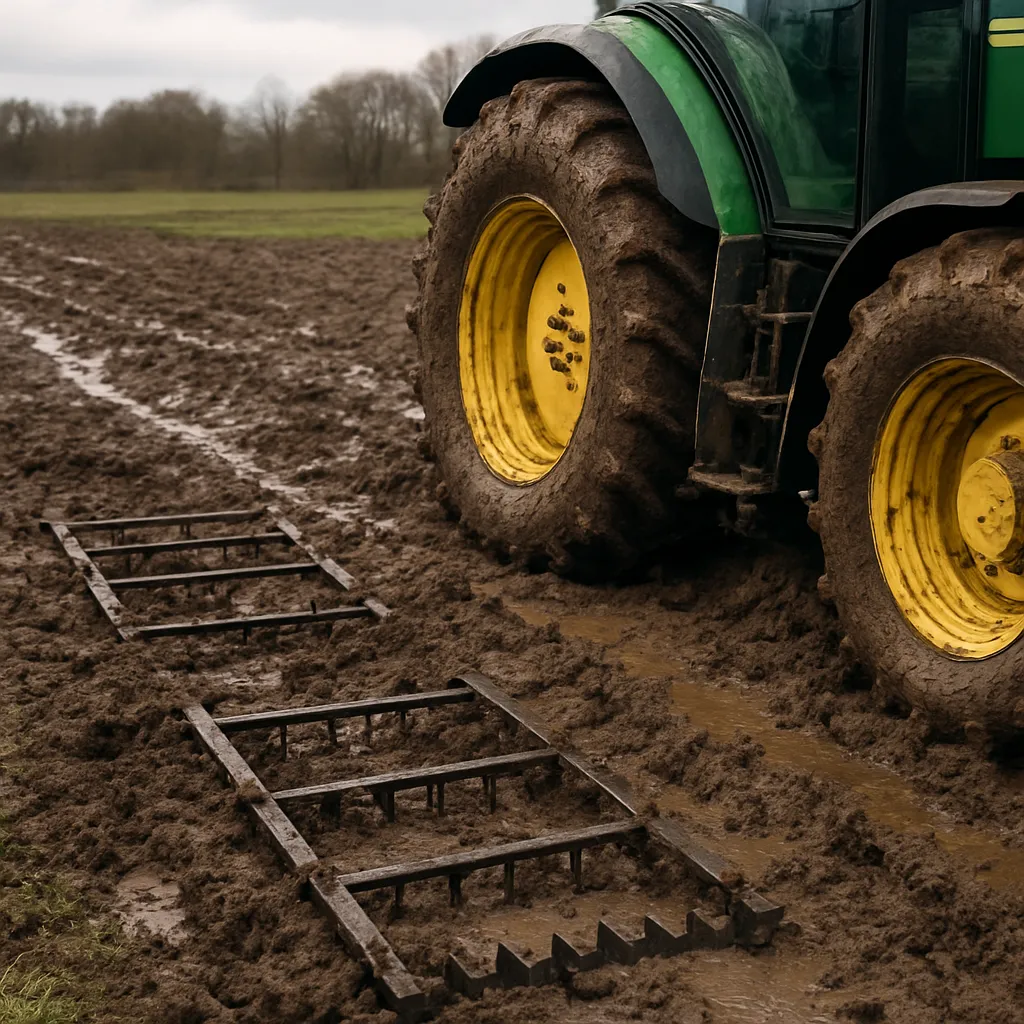
Operating in wet, soft ground presents a unique set of challenges for any farmer or contractor. Maximizing traction in muddy fields ensures safe operation, reduces soil compaction, and enhances overall productivity. This article explores practical strategies and equipment upgrades to keep your tractor moving smoothly even in the toughest conditions.
Understanding Muddy Field Challenges
Before implementing solutions, it is essential to grasp why mud undermines performance. Water-saturated soil loses its internal cohesion, causing wheels to spin and slip rather than advance. The following factors play a major role:
- Soil Structure: Clay-heavy soils become sticky and dense when wet, while loamy soils turn slick.
- Surface Water: Puddles and standing water reduce contact between tire tread and firm ground.
- Weight Distribution: Imbalanced loads cause one axle to sink deeper, increasing resistance.
Impact on Equipment
Struggling for grip not only slows fieldwork but stresses mechanical components. Excessive wheel spin can overheat the transmission, strain the axles, and erode the differential seals. Understanding these risks emphasizes the need for proactive measures.
Enhancing Tire Grip and Pressure Management
Tire selection and proper inflation are perhaps the easiest ways to boost performance in wet fields. Adjusting these parameters can mean the difference between stuck and steady.
Choosing the Right Tire
- Implement agricultural tires with deep, V-shaped tread patterns that channel mud away from the contact patch.
- Consider wider tires or dual wheel setups to spread the load and reduce ground pressure.
- Explore specialty tires such as flotation or radial designs for extremely soft or peaty soils.
Optimizing Tire Pressure
Lowering tire pressure increases the contact area and improves grip. However, too low a pressure risks tire damage and reduced steering precision. Follow these guidelines:
- Reduce pressure by 10–20% from the manufacturer’s dry-soil recommendation.
- Fine-tune using on-the-go pressure-adjustment systems for variable field conditions.
- Monitor for signs of over-deflection, such as sidewall folding or excessive heat buildup.
Advanced Techniques and Attachments for Improved Traction
Beyond tires, a range of accessories and driving techniques can enhance movement in mud.
Weight Ballasting and Distribution
- Add front or rear ballast weights to achieve balanced loading and prevent wheel spin.
- Use liquid ballast options in dual tires to fine-tune weight distribution dynamically.
- Implement front-end caster or counterweight systems when towing heavy implements.
Implementing Lockable Differentials and Traction Control
Modern tractors often feature locking differentials and electronic traction-assist systems. These technologies ensure torque is delivered evenly:
- Engage front and rear differential locks to force wheels to rotate together when slipping occurs.
- Utilize traction control modes within the transmission to modulate power delivery.
Installing Tire Chains and Tracks
- Tire chains provide immediate bite and can be fitted quickly in the field.
- Rubber tracks or track conversion kits distribute weight more evenly and excel in the muddiest soils.
- Assess the trade-offs: chains can damage hard surfaces, while tracks require additional maintenance.
Driving Techniques and Field Practices
Proper handling and planning often yield better results than equipment changes alone.
Recommended Driving Habits
- Maintain a steady throttle to minimize slipping; avoid sudden accelerations that dig ruts.
- Use the highest feasible gear to reduce torque spikes in wheel hubs.
- Plan turns in firmer zones and avoid sharp cornering that exacerbates sinking.
Field Preparation and Path Selection
Preparation reduces the mud’s impact:
- Create firm headlands by compacting the soil with a roller during drier days.
- Establish predefined access routes to and from wet areas to minimize random traffic.
- Consider drainage improvements like shallow ditches or tile lines to lower water tables.
Maintenance and Safety Considerations
Working in challenging terrain demands extra attention to tractor upkeep and operator safety.
Post-Operation Cleaning and Inspection
- Thoroughly wash undercarriage and wheel wells to remove residual mud and prevent corrosion.
- Inspect seals, bearings, and brake components for debris-induced wear.
- Grease and lubricate pivot points frequently to maintain smooth operation.
Operator Training and Emergency Protocols
- Ensure all operators understand the use of differential locks and ballast adjustments.
- Keep recovery gear such as tow straps, winches, and heavy-duty shackles readily available.
- Establish clear communication methods when multiple machines work in proximity.