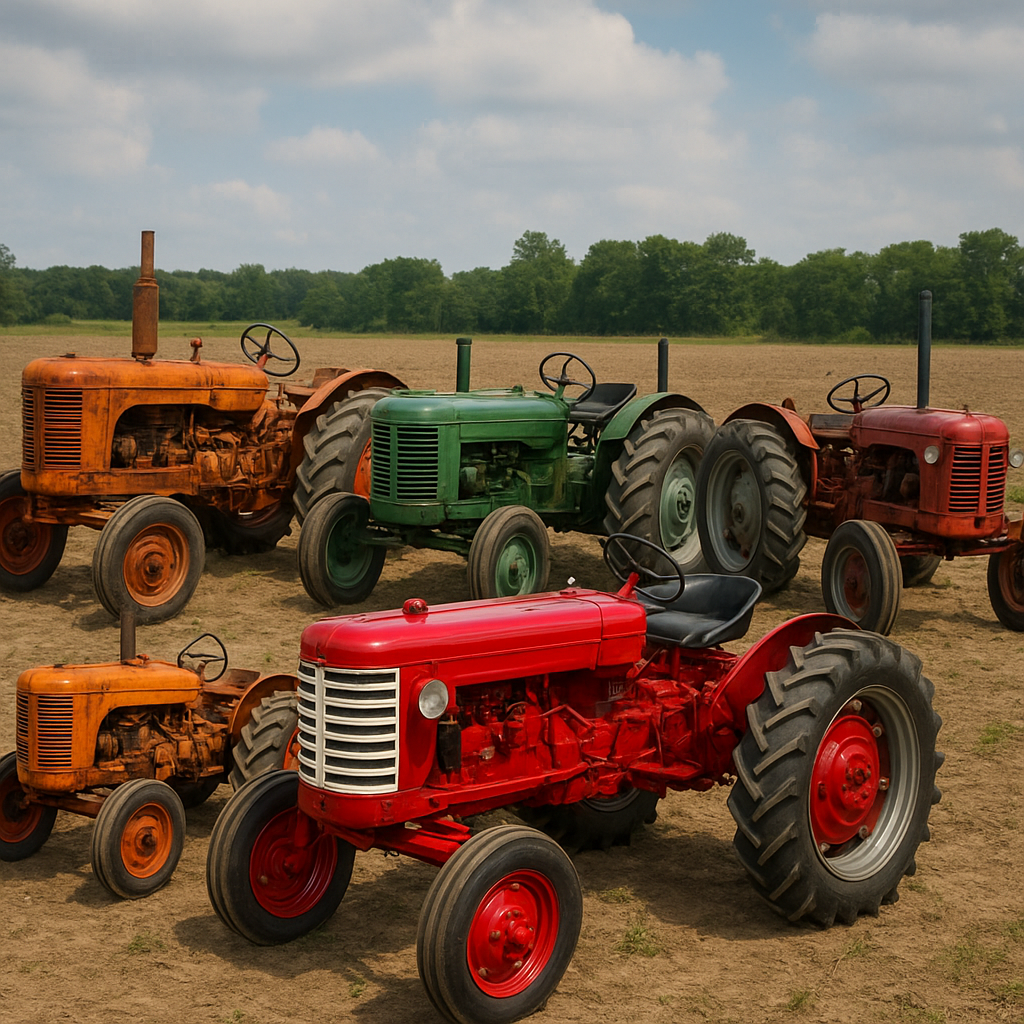
The enduring fascination with classic farm machinery extends far beyond agricultural fields. Vintage tractors hold a special place in the hearts of enthusiasts, blending mechanical ingenuity with rural nostalgia. From sun-warmed steel fenders to hand-cranked starters, these machines evoke a bygone era when simplicity and durability reigned supreme. Many collectors dedicate years to tracking down rare components, restoring original paint schemes, and participating in local shows. Whether displayed at county fairs or rumbling across plowed fields during a demonstration, vintage tractors offer a tangible link to the pioneering spirit of early farming families.
Why Vintage Tractors Captivate Collectors
For many aficionados, each tractor represents a piece of agricultural heritage. The allure starts with the unmistakable engine note, a rhythmic chug that transports listeners back to the first half of the 20th century. Collectors prize the robust mechanical layout that emphasizes ease of maintenance and straightforward controls. In an age of complex electronics and computerized guidance systems, a simple carburetor and mechanical fuel pump can feel downright refreshing. This emphasis on hands‐on interaction underscores the tractors’ craftsmanship and the intimate relationship between operator and machine.
Another factor driving interest is the tractors’ role in shaping rural economies. Models like the Fordson and Allis-Chalmers series played pivotal roles during the mechanization boom, enabling small farms to increase productivity. Each tractor carries its own story of field work, barnyard chores, and seasonal cycles. Accumulating patina, dents, and wear only adds to its narrative, creating a sense of authenticity that spotlessly restored replicas struggle to match. For purists, preserving that original surface finish and minor imperfections preserves a tractor’s soul.
Finally, the social dimension cannot be overlooked. Collector clubs and tractor pull events foster camaraderie among owners, swapping parts catalogs and restoration tips. Regional gatherings—often held at agricultural museums or fairgrounds—feature engine demonstrations, awards for best restoration, and brisk auctions. The vintage tractor community thrives on shared passion, where even modest models can command premium prices when presented in impeccable condition or with documented provenance.
Top 5 Vintage Tractors Collectors Love
-
John Deere Model A (Introduced 1934)
The John Deere Model A stands as a flagship of American farm machinery. Boasting nearly 16 horsepower, it featured a two-cylinder engine renowned for its distinctive “Johnny Popper” sound. The tractor’s three-point hitch, adopted later in its production run, revolutionized implement mounting and solidified its status as an industry standard. Collectors prize the Model A for its elegant green and yellow color scheme and its role in popularizing adjustable rear wheels to match various row widths.
Despite a production run spanning nearly three decades, well-preserved Model As are increasingly scarce. Finding a unit with original castings, dashboard instruments, and functional lighting can be a quest lasting years. Complete restorations often involve sourcing NOS (new-old stock) parts or fabricating replicas. The payoff, however, is a machine that encapsulates early mechanized farming and commands respect at any vintage tractor show.
-
International Harvester Farmall H (1939–1953)
The Farmall H transformed row-crop cultivation with its narrow front end and high-clearance design. Powered by a four-cylinder engine delivering around 26 horsepower, it balanced power and agility, making it ideal for plowing, planting, and cultivating. Farmall H bodies featured side shields that protected the engine and provided a signature sloping hood look. Many collectors appreciate the original IH red paint as a hallmark of robustness.
Low production numbers of early serial-numbered H models boost their rarity. Some enthusiasts specialize in tracking down the earliest builds or those fitted with optional lighting kits and canopy attachments. Whether restored to showroom condition or lightly refurbished to retain field marks, the Farmall H remains a top pick for serious hobbyists.
-
Fordson Major (1948–1964)
Built by Ford Motor Company in England, the Fordson Major gained acclaim for its sturdy three-cylinder Fordmon-D engine and distinctive grey paint. Delivering roughly 30 horsepower, it served both European smallholders and export markets around the globe. Its robust construction, simple controls, and affordable price point endeared it to generations of farmers.
Collectors often seek Major variants like the “Diesel” or “Super Major,” which introduced improved torque and upgraded hydraulics. Finding a Major with intact toolboxes and original operator manuals adds significant value. The Fordson’s cross‐continental history also sparks interest among European and North American collectors alike.
-
Allis-Chalmers Model WC (1942–1954)
Marketed as an affordable, utilitarian workhorse, the Allis-Chalmers Model WC featured a gasoline engine developing 22.5 drawbar horsepower. Its bright orange paint and low-slung silhouette made it instantly recognizable. The WC’s emphasis on simplicity—no electric starter in early models, minimal gauges, and a basic fuel tank—epitomized the concept of a no-frills tractor.
Collectors admire the WC for its role in keeping small farms operational during and after World War II. Variants with electric start, lighting, or narrow front ends are especially sought after. Restoring the WC to its original shade of orange and preserving period decals are common goals among restoration experts.
-
Massey Ferguson 65 (1958–1964)
The Massey Ferguson 65 combined modern styling with reliable performance. Its three-cylinder Perkins diesel engine delivered around 42 horsepower, making it one of the more powerful vintage models. The iconic silver and red livery, along with the comfortable operator platform, gave the MF 65 a more contemporary appeal compared to its peers.
Collectors prize units still wearing original factory paint and unobstructed serial tags. The tractor’s innovative three-point hitch and multi-speed transmission made it popular for both crop work and hay baling. Well-restored examples often spearhead vintage tractor parades and serve as prime examples of mid-century agricultural progress.
Restoration and Preservation in the Vintage Tractor Community
Bringing a worn tractor back to life demands patience, precision, and passion. Many restorers begin by thoroughly documenting the machine’s condition, snapping photos of every panel, control lever, and engine compartment. This visual archive aids in sourcing correct parts and matching paint codes. Some enthusiasts prefer a full nut-and-bolt restoration, while others opt to retain original patina for historical authenticity.
Key steps in a successful project include:
- Disassembly and inventorying components, labeling each piece to ensure proper reassembly.
- Engine rebuilding, which often involves honing cylinders, replacing piston rings, and checking crankshaft tolerances to restore horsepower and reliability.
- Chassis and body work, including sandblasting old paint, treating rust, and applying rust‐inhibiting primers before top‐coat finishes in factory colors.
- Electrical rewiring, especially for models originally built without lighting, to comply with modern safety standards while preserving vintage aesthetics.
- Upholstery repair or replacement for seat cushions and operator pads, blending comfort with period-correct materials.
Enthusiasts often leverage regional clubs and online forums to track down rare gears, hydraulic pumps, and NOS decals. Swap meets and annual auctions can yield unexpected finds—sometimes entire parts tractors sold at bargain prices. The collective knowledge of a dedicated community ensures that even the most obscure models remain documented and serviceable for future generations.
Whether showcased at a county fair or featured in a specialized museum exhibit, vintage tractors stand as testaments to an era defined by mechanical ingenuity and agricultural innovation. Their enduring appeal lies not only in raw performance but in the human stories interwoven with every weld, gear, and stroke of paint.