Advances in agricultural technology have ushered in a new era where fields are monitored by sensors, decisions are guided by algorithms, and tractors are more than mere machines—they are integral nodes in a vast, data-driven ecosystem. As farmers strive to optimize yields, reduce waste, and tackle environmental concerns, the integration of precision equipment and intelligent systems transforms traditional practices into a coordinated network of real-time information and automated action.
Revolutionizing Agriculture with Smart Farming
The concept of smart farming revolves around deploying advanced technologies—ranging from satellite imaging to machine learning—to make agricultural operations more efficient, profitable, and environmentally responsible. By combining data from multiple sources, farmers can monitor soil moisture, nutrient levels, and crop health with unprecedented accuracy.
Key components of this transformation include:
- IoT Sensors: Ground-based devices that measure parameters like humidity, temperature, and pH to inform irrigation and fertilization schedules.
- Satellite & Drone Imaging: High-resolution photographs and multispectral data help detect pests, diseases, and water stress before visual symptoms appear.
- Machine Learning & Analytics: Algorithms analyze historical and real-time data to predict optimal planting times, harvest windows, and yield estimates.
By harnessing these tools, farmers gain a 360-degree view of their operations, moving from reactive problem-solving to proactive management. The result is increased crop productivity, reduced chemical usage, and a more sustainable approach to farming.
Connected Tractors: The Backbone of Modern Fields
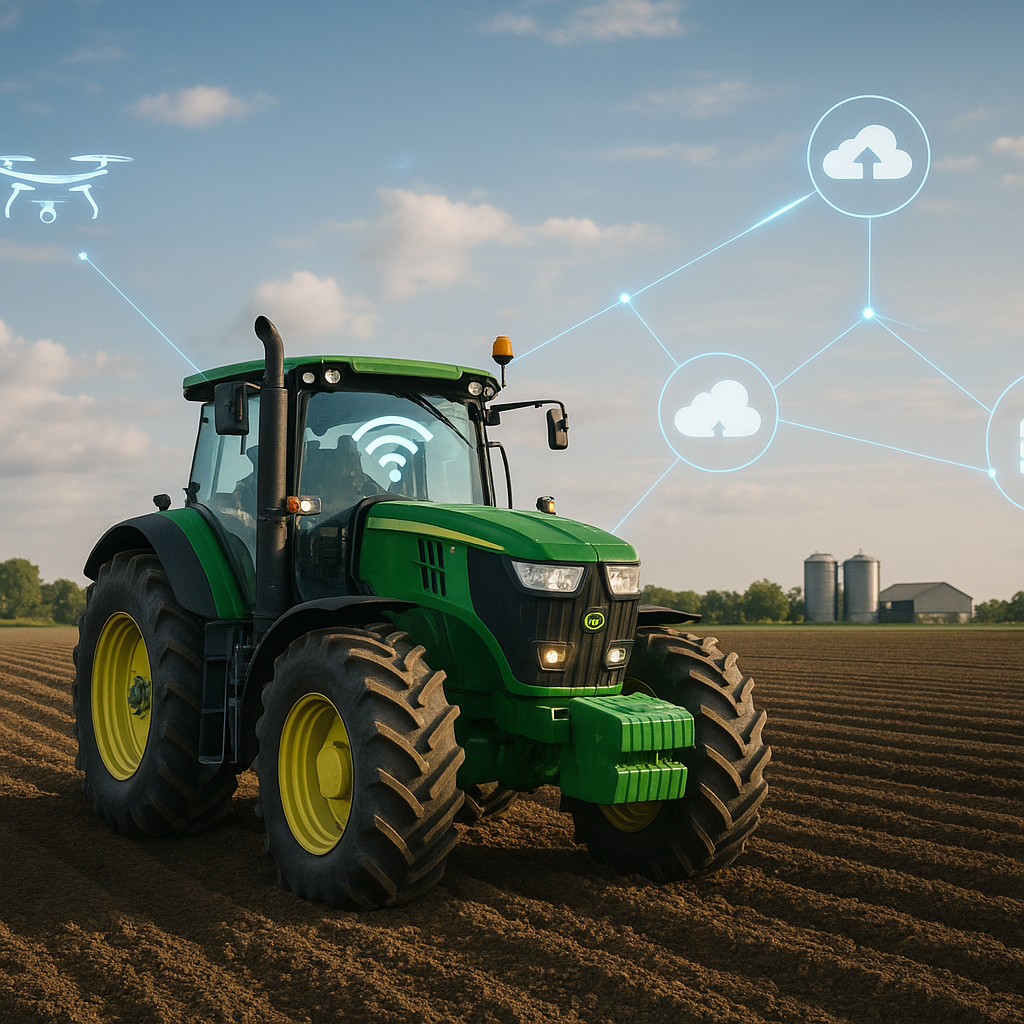
Once confined to simple mechanical functions, today’s tractors are evolving into sophisticated, networked platforms equipped with GPS, onboard computers, and telematic connectivity. These autonomous or semi-autonomous machines can perform tasks with minimal human intervention, guided by precision maps and sensor feedback.
Core Technologies
- GPS & RTK Guidance: Real-time kinematic positioning provides centimeter-level accuracy, ensuring straight planting rows and optimized material usage.
- Telematics Systems: Wireless modules transmit performance metrics, fuel consumption data, and maintenance alerts back to a centralized dashboard.
- Autopilot & Steering Automation: Electronic controls steer implements along predefined routes, reducing operator fatigue and overlap.
- Edge Computing: Onboard processors analyze sensor inputs and make split-second adjustments to seeding depth, spraying rate, or tilling intensity.
By incorporating these technologies, tractors evolve from passive tools into innovation hubs, fostering seamless collaboration between machines, humans, and data platforms.
Benefits of Data-Driven Machinery
The synergy between smart farming and connected tractors yields a multitude of advantages:
- Efficiency Gains: Automated guidance reduces overlaps and skips, saving seeds, pesticides, and fuel.
- Enhanced Decision-Making: Continuous data streams empower farmers to adapt strategies on the fly, based on real-world metrics.
- Sustainability: Precision applications minimize runoff, protect ecosystems, and align with environmental regulations.
- Labor Optimization: Autonomous functions alleviate labor shortages by enabling a single operator to manage multiple machines.
- Predictive Maintenance: Telematics alert operators to wear and tear, lowering downtime and repair costs.
Beyond operational improvements, this paradigm shift fosters a collaborative environment where agronomists, equipment manufacturers, and data scientists work together to refine algorithms and hardware for ever-better performance.
Case Studies: From Fields to Results
Several agricultural enterprises have showcased the power of integrated systems:
- Midwestern Grain Farm: Leveraging RTK-guided planters, this operation reduced seed waste by 12% and increased yield by 8% over two seasons.
- Vineyard Cooperative in California: Drones combined with soil moisture sensors allowed precise irrigation scheduling, cutting water usage by 20%.
- Cereal Producer in Ukraine: Autonomous tractors equipped with machine vision identified weed hotspots and performed targeted herbicide applications, reducing chemical use by 30%.
These examples illustrate how the convergence of connectivity, robotics, and analytics drives measurable ROI, while enhancing environmental stewardship.
Challenges and Future Prospects
Despite the promise of smart farming, widespread adoption faces hurdles:
- Connectivity Gaps: Remote fields often lack reliable broadband, limiting real-time data exchange.
- High Capital Costs: Upfront investments in sensors, software subscriptions, and modern tractors can be prohibitive for smaller farms.
- Data Integration: Fragmented platforms and proprietary formats complicate seamless interoperability between devices and management software.
- Workforce Training: Operators require new skill sets in digital tools, data interpretation, and system maintenance.
Addressing these challenges will involve public-private partnerships to expand rural internet access, financing options tailored for smallholders, and open standards for equipment and software. Meanwhile, ongoing research focuses on improving battery life for electric tractors, enhancing AI-driven weed recognition, and developing modular attachments that adapt to varying field conditions.
The Road Ahead
As technologies mature and costs decline, the vision of fully networked farms guided by intelligent tractors becomes increasingly attainable. Future tractors may autonomously navigate entire plots, coordinate with aerial drones for real-time scouting, and self-diagnose mechanical issues before they arise. The integration of blockchain could ensure transparent supply chains, while advanced simulation tools will allow farmers to test scenarios virtually before applying interventions in the field.
Ultimately, the merging of human expertise with innovative machinery promises to redefine agriculture—boosting productivity, conserving resources, and ensuring food security for a growing global population.