The compact tractor has undergone a remarkable transformation since its humble beginnings, evolving into a highly capable and versatile machine. This journey of continuous improvement has been driven by advances in technology, shifting agricultural demands, and the pursuit of greater efficiency. From early mechanical models to today’s precision-guided, emission-controlled units, compact tractors have become indispensable tools for farmers, landscapers, and property owners worldwide. This article explores the major milestones and innovations that have shaped the modern compact tractor, highlighting key features and anticipating future trends.
Historical Background and Early Developments
The origins of the compact tractor can be traced back to the early 20th century, when small-scale farmers sought alternatives to animal labor. Initial prototypes were often modified automobile engines mounted on simple frames. These machines offered basic mechanical power but lacked the reliability and versatility needed for widespread adoption.
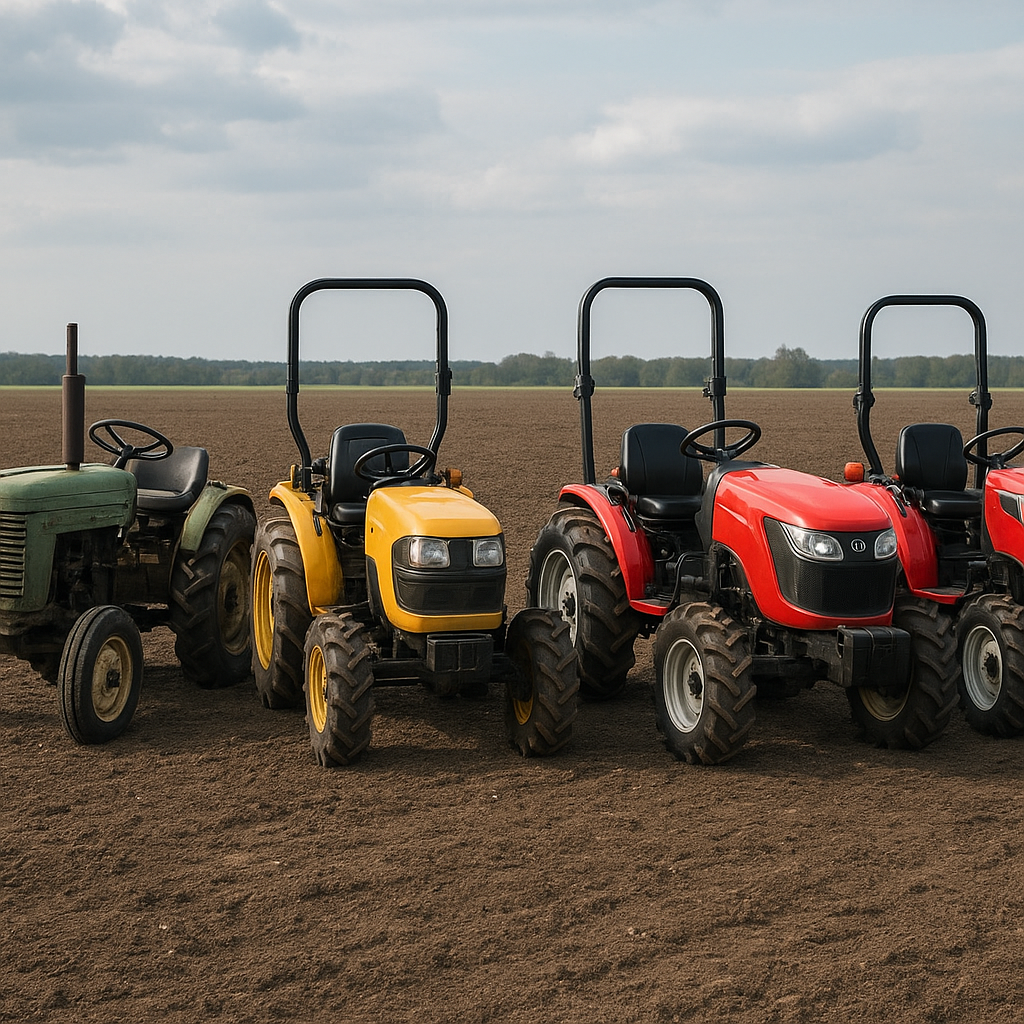
During the 1930s and 1940s, several manufacturers introduced purpose-built small tractors designed specifically for light-duty tasks. These models featured:
- Rigid steel frames that replaced wooden wagon wheels
- Simple mechanical transmissions with a limited range of gears
- Single-cylinder or V-twin engines providing modest horsepower
Although primitive by today’s standards, these early tractors marked a significant leap forward. They allowed farmers to perform plowing, cultivating, and hauling more quickly than with animal teams. However, maintenance was frequent, and operator comfort was minimal—no cab, no suspension, and very basic seat padding.
Key Technological Advancements
From the 1950s to the 1980s, the compact tractor underwent a series of breakthroughs that solidified its place in agricultural and property-management applications.
Engine and Powertrain Innovations
- Diesel Engines: Replacing gasoline units, diesel engines provided improved fuel economy and better torque characteristics.
- PTO (Power Take-Off) Systems: Standardized PTO shafts enabled attachment of a wide variety of implements, from mowers to tillers.
- Hydrostatic Transmissions: Introduced smoother speed control and eliminated the need for manual clutching in many work scenarios.
Hydraulics and Implement Integration
The integration of advanced hydraulics was a game-changer. Adjustable three-point hitches with category classifications expanded the range of compatible implements. Tractors could now lift heavier loads, operate backhoes, front-end loaders, and power hydraulic motors for specialized attachments.
Operator Comfort and Safety
- Roll-Over Protective Structures (ROPS) became standard, reducing the risk of injury in tipping accidents.
- Ergonomic controls and seating improved operator endurance during long hours of work.
- Optional cabs with heating and air conditioning allowed year-round operation in harsh climates.
Modern Innovations and Smart Features
In the 21st century, compact tractors have embraced digitalization and environmentally conscious design. These machines are no longer purely mechanical; they are integrated systems combining hardware, software, and data analytics.
Precision Agriculture
GPS-guided steering systems enable precision farming practices, reducing overlap during field passes and optimizing input usage. By following predetermined paths with minimal human intervention, tractors minimize soil compaction and conserve fuel.
Telematics and Connectivity
Many models now offer built-in telematic modules that transmit real-time data to cloud platforms. Fleet managers can monitor:
- Fuel consumption and idle time
- Diagnostic codes for maintenance forecasting
- Location tracking to improve logistic efficiency
This connectivity enhances asset management and ensures maximum uptime.
Emission Controls and Sustainability
- Tier 4 Final engines with Selective Catalytic Reduction (SCR) meet stringent emission standards.
- Biodegradable hydraulic fluids reduce environmental impact in case of leaks.
- Electric and hybrid prototypes are emerging, offering near-zero emissions and quieter operation.
Emerging Trends and Future Prospects
The trajectory of compact tractor development suggests a future where automation, alternative fuels, and integrated farm management systems become the norm.
Autonomous Operation
Fully autonomous compact tractors are under testing, guided by LIDAR, cameras, and advanced algorithms. These machines can perform repetitive tasks such as mowing and seeding without constant supervision, freeing operators for higher-level planning.
Alternative Powertrains
- Electric models promise lower maintenance and instant torque delivery, although energy storage remains a challenge.
- Hydrogen fuel cells could extend operational range while emitting only water vapor.
Integrated Farm Ecosystems
Future designs are expected to interface seamlessly with other smart devices, including drones, soil sensors, and automated irrigation systems. Data collected across the farm will inform tractor operations for optimal timing and input application, boosting overall productivity.
Durability and Adaptability
Manufacturers are focusing on modular components, allowing rapid reconfiguration of tractors to suit diverse tasks. Interchangeable modules for cargo handling, forestry mulching, and specialized planting will make one machine serve multiple purposes throughout the year.
Adoption Challenges and Market Dynamics
While innovation drives the industry forward, several hurdles must be addressed for widespread adoption of advanced compact tractors.
Cost Considerations
- High initial purchase prices for smart and autonomous systems
- Training requirements for operators to utilize new features effectively
- Infrastructure investments needed for charging stations or hydrogen refueling
Regulatory Landscape
Compliance with evolving safety and emission regulations demands ongoing research and development. Global markets may have differing standards, complicating manufacturing and distribution.
Scale and Versatility
Smaller farms and hobbyists require simple, affordable models, whereas large commercial operations demand high-capacity, feature-rich tractors. Manufacturers must balance these divergent needs by offering diverse product lines.
Conclusion: Embracing a Dynamic Future
The compact tractor stands at the intersection of mechanical robustness and digital ingenuity. Its evolution reflects broader trends in agriculture: the move toward automation, the quest for sustainability, and the integration of data-driven decision-making. As challenges such as cost and regulations are navigated, the compact tractor will continue to adapt, offering ever-greater value to its users. Whether plowing fields, managing landscapes, or powering specialized attachments, today’s compact tractors exemplify the enduring power of innovation merged with practical engineering.