Proper lubrication is a cornerstone of effective tractor operation and maintenance. By understanding the unique requirements of heavy-duty agricultural equipment, farmers and mechanics can extend equipment life, boost performance, and minimize costly downtime. This article explores the essential practices for tractor lubrication, from selecting the right fluids to establishing a robust maintenance schedule.
Fundamental Principles of Tractor Lubrication
Understanding Viscosity and Oil Grades
Viscosity directly affects how a lubricant flows under various temperatures. Selecting the correct grade ensures that oil maintains a protective film between moving parts. In cold climates, a lower-viscosity oil helps the engine start smoothly, while warmer conditions demand higher-viscosity oils to prevent breakdown. Always consult the manufacturer’s chart for recommended SAE and ISO grades.
The Role of Additives
Modern tractor oils contain specialized additives that combat oxidation, corrosion, and wear. Key additives include:
- Detergents to keep engine components clean
- Dispersants to prevent sludge formation
- Anti-wear agents to protect high-load bearings and gears
- Friction modifiers to optimize fuel efficiency
Choosing oils with a balanced additive package is critical for maintaining optimal engine health and extending service intervals.
Selecting the Right Lubricants for Tractor Systems
Engine Oils
Tractor engines often operate under high torque and variable load conditions. Use engine oils formulated for heavy-duty diesel engines that meet API CI-4, CJ-4, or CK-4 specifications. These oils feature robust additive packages to handle soot, high temperatures, and extended drain intervals. Always replace the oil filter during each oil change to ensure contamination control.
Hydraulic Fluids
Hydraulic systems require fluids with exceptional anti-foaming, thermal stability, and shear resistance. Typical specifications include ISO VG 46 or 68. Look for fluids labeled “multi-purpose” if they’re approved for both hydraulic and transmission systems. This simplifies inventory and reduces the risk of cross-contamination.
Gear and Transmission Oils
Transmission and final drive components demand extreme-pressure (EP) additives to protect against high-load wear. Use oils meeting API GL-4 or GL-5 specifications. For synchronized transmissions, avoid high sulfur-phosphorus content that can harm synchronizer rings.
Greases for Bearings and Joints
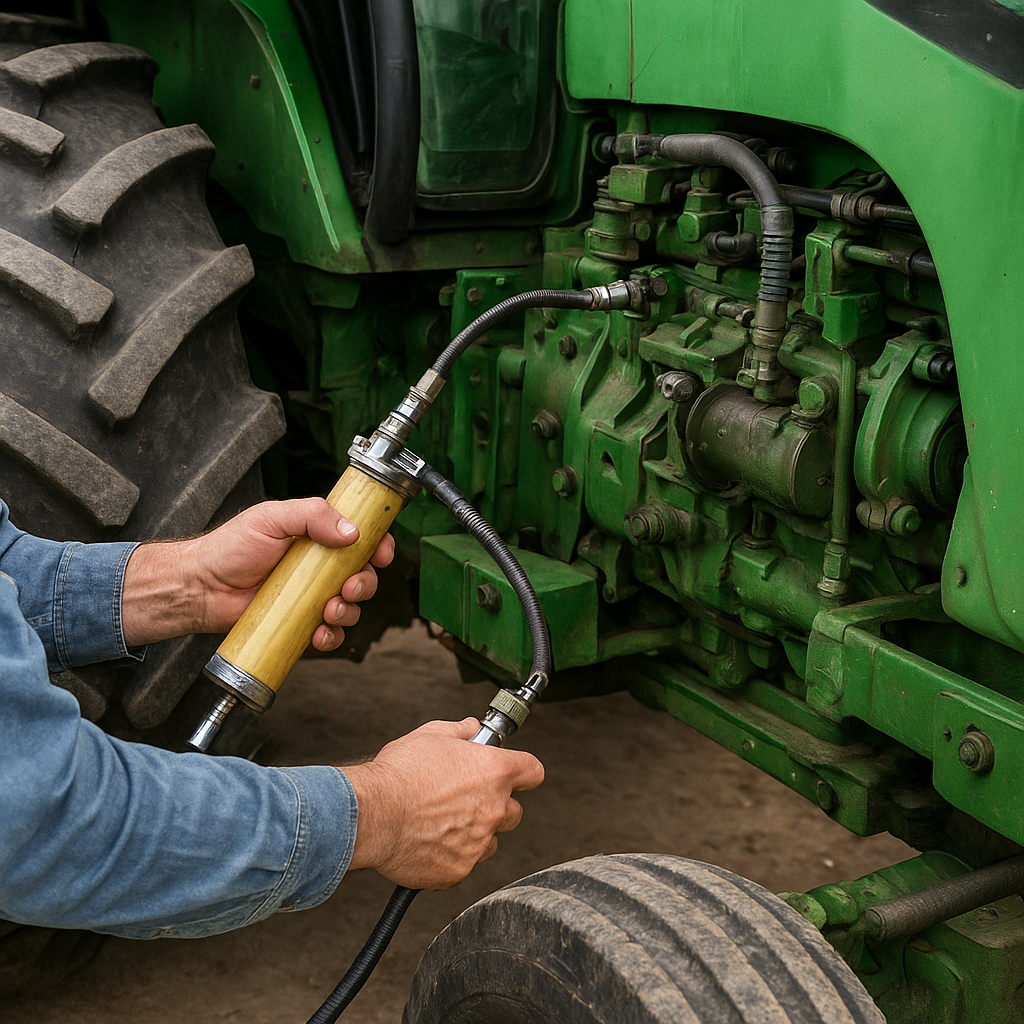
Applying the right grease is crucial for universal joints, wheel bearings, and pivot points. Choose polyurea-thickened or lithium-complex greases with NLGI grade 2 consistency. They provide excellent water resistance and corrosion protection. Regularly purge old grease and debris before applying fresh lubricant to prevent abrasive wear.
Best Practices for Application Techniques
Scheduled Oil Changes
Following manufacturer-recommended intervals is the foundation of a reliable lubrication program. Typical schedules may be:
- Engine oil: every 200–300 hours of operation
- Hydraulic fluid: every 500 hours or annually
- Transmission oil: every 500–600 hours
- Grease points: every 50–100 hours
Adjust intervals based on operating conditions, such as dusty environments or heavy towing.
Cleanliness and Contamination Control
Contaminants like dirt and water drastically reduce lubrication effectiveness. Always wipe grease fittings clean before attaching the grease gun. Use high-quality funnel filters for oil top-ups, and store lubricants in sealed, dry containers. Implement sight glasses or inline particle counters for critical hydraulic and transmission systems.
Proper Torque on Drain and Fill Plugs
Over-tightening drain plugs can strip threads, while under-tightening may cause leaks. Use a calibrated torque wrench set to the manufacturer’s specifications. Always replace crush washers or O-rings to maintain a reliable seal.
Advanced Maintenance and Monitoring Strategies
Oil Analysis and Condition Monitoring
Regularly sampling engine, hydraulic, and transmission fluids provides insight into wear metals, additive depletion, and contamination levels. Partnering with a laboratory can yield reports highlighting:
- Iron, copper, and chrome content indicating component wear
- Water and glycol contamination levels
- Oxidation and viscosity shifts
This proactive approach helps schedule maintenance before catastrophic failures, safeguarding longevity and reducing repair costs.
Temperature and Pressure Checks
Monitoring operating temperatures and pressures in hydraulic and lubrication circuits helps detect blockages or pump degradation. Install gauges or electronic sensors at critical points. Significant deviations from baseline readings signal potential issues, enabling early intervention.
Sealing and Protection
Implement high-quality seals and breathers on gearboxes and hydraulic reservoirs to prevent dust, moisture, and particulate ingress. Keep air intake filters clean and replace them at recommended intervals to preserve lubricant purity.
Common Pitfalls and Troubleshooting
Foaming and Aeration
Foamy oil fails to provide a consistent film, leading to accelerated wear. Causes include overfilling reservoirs, damaged breathers, and high agitation. Remedy by correcting fluid levels, replacing breathers, and using anti-foaming additives.
Oil Breakdown and Carbon Buildup
Operating at sustained high temperatures or using inappropriate oil grades leads to oxidation and carbon deposits. Preventive measures include using high-temperature-rated oils, maintaining proper coolant levels, and avoiding idling for extended periods.
Cross-Contamination of Fluids
Mixing hydraulic fluid with gear oil or diesel with engine oil compromises additive chemistry. Clearly label all fill points, maintain separate dispensing tools, and train operators on proper procedures.
Grease Starvation
Grease fittings located in hard-to-reach areas are often overlooked, resulting in bearing damage. Develop a color-coded lubrication map of the tractor, ensuring no fitting is missed during routine servicing.