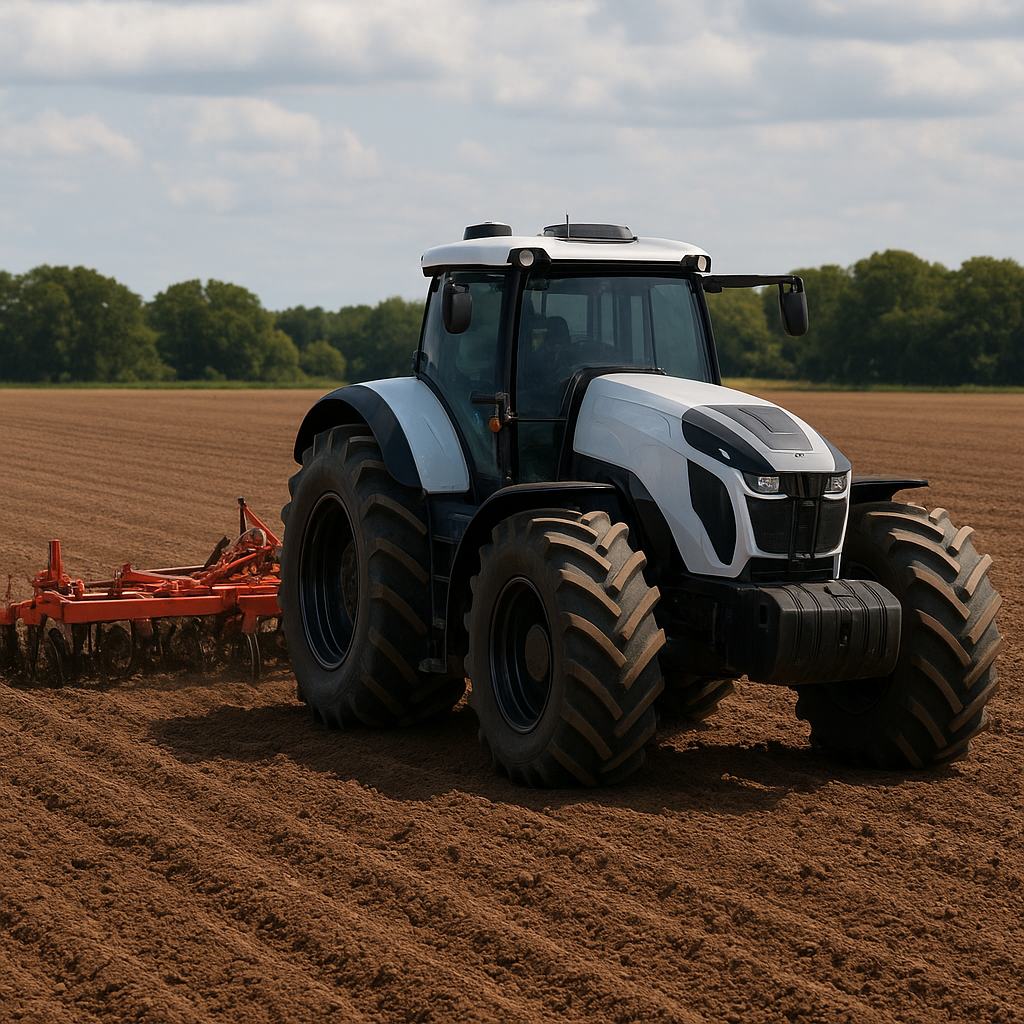
In recent years, the agricultural sector has witnessed a revolution driven by advances in robotics and artificial intelligence. Among these breakthroughs, the advent of autonomous tractors stands out for its potential to reshape farm management, reduce labour costs, and promote sustainability. This article explores the transformations brought by autonomous machinery, examines the underlying technologies, and considers both the advantages and the challenges faced by modern farmers.
The Emergence of Autonomous Tractors
The concept of driverless farm equipment dates back decades, but only recently have improvements in sensors, computing power, and global navigation satellite systems (GNSS) made fully autonomous tractors a viable reality. Early prototypes required bulky hardware and suffered from limited battery life or unreliable positioning data. Today’s models leverage cloud connectivity and advanced algorithms to achieve centimeter-level accuracy in field operations, opening the door to a new era of precision agriculture.
Several leading agricultural machinery manufacturers have introduced autonomous tractor lines, partnering with tech firms to integrate machine learning modules capable of recognizing crop rows, detecting obstacles, and interpreting soil conditions in real time. This collaboration between traditional engineering and cutting-edge technology is accelerating adoption rates, particularly in regions with labour shortages or fragmented farmland parcels.
Key Technologies Powering Modern Tractors
GPS and GNSS Navigation
High-precision positioning systems lie at the heart of every driverless tractor. By combining signals from GPS, GLONASS, Galileo, and BeiDou constellations, machines can calculate their exact coordinates with sub-inch accuracy. Differential corrections delivered over cellular or satellite links ensure consistent performance, even in areas with challenging topography or poor signal reception.
Machine Learning and AI
Artificial intelligence algorithms are trained on vast datasets of field imagery to identify crop health indicators, weed infestations, and varying soil textures. Through deep learning, tractors can adapt their routes on the fly and optimize tasks such as planting, spraying, and harvesting. This data-driven approach reduces overlapping passes, conserves resources, and enhances yield predictions.
Sensor Fusion and IoT Connectivity
Modern autonomous tractors boast an array of sensors—LiDAR, radar, ultrasonic, and optical cameras—that work in unison to create a 360° view of the environment. Internet of Things (IoT) modules relay sensor readings to farm management platforms, where agronomists monitor performance and tweak operational parameters remotely. The result is a seamless integration of machinery, software, and cloud analytics that maximizes efficiency.
Benefits of Deploying Driverless Tractors
- 24/7 Operation: Without the need for breaks or shift changes, tractors can maintain continuous fieldwork, capitalizing on narrow weather windows.
- Labour Savings: Automated machines tackle repetitive tasks, allowing farm workers to focus on supervision, maintenance, and strategic planning.
- Resource Optimization: Precision seeding, variable-rate fertilization, and targeted pesticide application reduce waste and lower environmental impact.
- Yield Improvement: Consistent, accurate field passes enhance germination rates and overall crop uniformity.
- Reduced Soil Compaction: Guided routing systems limit unnecessary wheel tracks, preserving soil structure and fertility.
Farmers deploying autonomous units often notice a boost in operational resilience. These tractors can navigate under low-light conditions or in light rain, provided sensors remain unobstructed. Their ability to collect and relay real-time data also informs future planting strategies, creating a virtuous cycle of continuous improvement.
Challenges and Future Perspectives
Regulatory and Safety Concerns
Despite the promise, autonomous tractors face hurdles in terms of legislation. Many countries are still crafting regulations around unmanned agricultural vehicles, especially when they share roads with conventional traffic. Ensuring fail-safe mechanisms—emergency stop protocols, geofencing, and remote override functions—is critical to gaining public trust and regulatory approval.
Connectivity and Infrastructure
Reliable high-speed networks are essential for real-time control and data transmission. In remote farming regions, weak cellular coverage can hamper the performance of driverless tractors. To address this, some companies are exploring mesh-network solutions and private LTE installations that guarantee robust connectivity across vast estates.
Cost and Adoption Barriers
Initial investments in autonomous machinery and supporting infrastructure can be substantial, discouraging smaller operations from early adoption. Leasing models, cooperatives, and service-based offerings are emerging as alternatives, allowing farmers to pay per hectare of coverage rather than purchasing expensive hardware outright.
Future Innovations
The next generation of autonomous tractors will likely incorporate enhanced battery technology for zero-emission operation, advanced swarm algorithms enabling fleets to work in concert, and more intuitive human-machine interfaces. Integration with precision irrigation systems, robotic harvesters, and soil health sensors will craft an interconnected ecosystem that drives under a unified digital strategy.
Conclusion
As driverless tractors continue to evolve, their impact on global agriculture is set to deepen. By combining innovation, real-time analytics, and reliable automation, farmers gain a powerful toolkit for tackling labour shortages, volatile weather patterns, and ever-growing demands for sustainable food production. The journey toward fully autonomous farms is still unfolding, but the seeds of transformation have been sown, promising a future of smarter, more resilient agriculture.